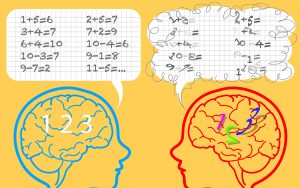
Dyscalculia is a specific learning disability that impacts a child’s ability to understand and work with numbers. Often referred to as “math dyslexia,” it can make even basic math tasks, like addition, subtraction, or understanding time, much more difficult (Shalev, 2004). Like other learning disabilities, dyscalculia is not linked to intelligence. Children with dyscalculia have average or above-average intelligence but struggle with math due to neurological differences in how their brains process numbers (Butterworth, 2010).
Understanding dyscalculia is important for creating effective support systems that help children navigate their challenges and succeed academically, socially, and in their everyday lives.
What Is Dyscalculia?
Dyscalculia is a learning disorder that specifically affects the ability to grasp number-related concepts or perform accurate calculations. Children with dyscalculia often have trouble with:
- Understanding number concepts: They might struggle to grasp basic math concepts, such as quantity, place value, or number relationships (Rousselle & Noël, 2007).
- Performing calculations: Basic operations like addition, subtraction, multiplication, and division can be challenging, even when they have been taught multiple times (Geary, 2004).
- Number sense: Understanding patterns, sequences, or mathematical symbols (like the minus sign) might be difficult (Rousselle & Noël, 2007).
- Mental math: Children with dyscalculia might have trouble with simple mental arithmetic, such as recalling math facts or estimating amounts in their heads (Butterworth, 2010).
- Time and spatial awareness: Reading clocks, understanding time, or estimating distances might also pose difficulties (Geary, 2004).
Dyscalculia affects many areas of a child’s life, from academic achievement to everyday activities like following directions that involve numbers (Geary, 2004).
Common Signs and Symptoms of Dyscalculia
The signs of dyscalculia can vary widely from child to child, but some of the most common indicators include:
- Difficulty learning and memorizing basic math facts: This includes struggling to remember multiplication tables or basic addition and subtraction facts, even after extensive practice (Shalev, 2004).
- Problems with understanding number concepts: Children with dyscalculia might not grasp the idea of number relationships, such as which number is greater or smaller, or the concept of more or less (Rousselle & Noël, 2007).
- Trouble with estimation: Estimating quantities, distances, or time can be especially challenging (Geary, 2004).
- Difficulty with math word problems: Understanding what the problem is asking, selecting the appropriate operation, and translating the words into numbers and equations can be overwhelming (Rousselle & Noël, 2007).
- Struggling with sequencing: Dyscalculia often makes it difficult to understand the order of numbers or the sequence of steps required to complete a math problem (Geary, 2004).
- Poor sense of direction or time: Children with dyscalculia may find it hard to read analog clocks or estimate how long tasks will take (Shalev, 2004).
- Challenges with money management: Simple tasks like counting money, making change, or understanding prices can be tricky for someone with dyscalculia (Rousselle & Noël, 2007).
Causes and Risk Factors
While the exact cause of dyscalculia is not fully understood, it is believed to have a neurological basis. The brain areas responsible for processing numbers and mathematical concepts may function differently in individuals with dyscalculia (Butterworth, 2010). Several factors may increase the risk of developing dyscalculia, including:
- Genetics: Like many other learning disabilities, dyscalculia often runs in families (Shalev, 2004).
- Prenatal factors: Factors such as maternal stress, alcohol or drug use, or complications during pregnancy may increase the risk of a child developing dyscalculia (Geary, 2004).
- Other learning disabilities: Dyscalculia can co-occur with other learning disabilities, such as dyslexia (a language-based learning disorder), ADHD, or language processing disorders (Butterworth, 2010).
- Brain structure and function: Studies show that differences in the way the brain processes numbers might be linked to dyscalculia. For example, research suggests that individuals with dyscalculia may have atypical development in the parietal lobe, which plays a critical role in understanding numbers and spatial awareness (Kaufmann et al., 2008).
Diagnosis of Dyscalculia
Dyscalculia can be diagnosed through a series of assessments conducted by educational psychologists or specialists in learning disabilities. These assessments typically include:
- Testing math skills: The person will be asked to complete a series of math problems to assess their number sense, calculation abilities, and math problem-solving skills.
- Cognitive and psychological evaluations: A thorough evaluation will assess other cognitive skills, such as memory, attention, and processing speed, to rule out other potential causes of math difficulties (Geary, 2004).
- Interviews and observations: Teachers, parents, and the child themselves may be interviewed to gain insight into the challenges they face and when the difficulties first began.
A diagnosis of dyscalculia is typically made after ruling out other factors, such as a lack of exposure to math instruction or general learning difficulties in other areas (Shalev, 2004).
Strategies and Support for Dyscalculia
While dyscalculia can be challenging, there are many ways to support children with the condition to help them succeed. The goal of intervention is not to “cure” dyscalculia, but to help children develop strategies to overcome the specific challenges they face with math.
Here are some strategies that may help:
- Use visual aids: Visual tools, such as number lines, charts, and manipulatives, can help children understand abstract math concepts (Geary, 2004).
- Break tasks into smaller steps: Breaking down complex problems into smaller, more manageable steps can make math more approachable and less overwhelming (Rousselle & Noël, 2007).
- Use technology: Math apps, online tutorials, or educational software can provide interactive and engaging ways for students to practice math concepts (Geary, 2004).
- Practice and repetition: Individuals with dyscalculia benefit from consistent practice and repetition. Creating a calm, distraction-free environment where math skills can be practiced daily can help solidify concepts over time (Butterworth, 2010).
- Use alternative methods of instruction: Some children with dyscalculia may respond better to multi-sensory teaching methods, where they can engage more than one sense (e.g., visual, auditory, and kinesthetic learning) when solving math problems (Shalev, 2004).
- Give extra time for assignments: Extra time on tests and assignments allows individuals with dyscalculia to process information at their own pace without feeling rushed (Geary, 2004).
- Build math confidence: Positive reinforcement is crucial. Encourage small successes and celebrate progress, as dyscalculia can often take a toll on a student’s self-esteem. Emphasizing effort and improvement, rather than just the correct answer, can help foster a positive attitude toward math (Rousselle & Noël, 2007).
- Consider accommodations: In school, students with dyscalculia may be eligible for accommodations like extended test times, oral exams, or the use of a calculator. These adjustments can help level the playing field and reduce frustration (Shalev, 2004).
Living with Dyscalculia
Dyscalculia doesn’t just affect children—it can persist into adulthood. However, with the right strategies, individuals with dyscalculia can lead successful and fulfilling lives. It’s important for parents, teachers, and others to provide the support and understanding needed to help children with dyscalculia thrive academically and in everyday situations.
People with dyscalculia may develop strong problem-solving skills, creative approaches to overcoming math challenges, and excel in fields that do not require a strong math focus. Embracing the unique strengths of students with dyscalculia can help them discover and pursue careers and hobbies they are passionate about (Kaufmann et al., 2008).
If you suspect that your child has dyscalculia, seeking early intervention and support is key. With patience, perseverance, and the proper strategies, children with dyscalculia can overcome challenges and reach their full potential.
References
-
Butterworth, B. (2010). Dyscalculia: From Science to Education. In The Oxford Handbook of Numerical Cognition (pp. 1033-1053). Oxford University Press.
-
Geary, D. C. (2004). Mathematical disabilities: Cognitive, neuropsychological, and genetic components. Psychological Bulletin, 130(4), 617–651.
-
Kaufmann, L., Kaufmann, W. R., & Baillieux, H. (2008). The Neurocognitive Basis of Dyscalculia: Evidence from Functional Imaging Studies. In Developmental Neuropsychology (Vol. 33, pp. 551-564). Taylor & Francis.
-
Rousselle, L., & Noël, M.-P. (2007). The Impact of Language on the Numerical Abilities of Young Children. Cognition, 105(1), 1-11.
-
Shalev, R. S. (2004). Developmental Dyscalculia. The Lancet Neurology, 3(8), 479–484.